When people think of Egypt, certain images leap instantly to mind: the Pyramids of Giza, the Nile River, the Sphinx staring into eternity. These are iconic, no doubt. They’re also crowded. And expensive. And honestly, a little predictable. There’s nothing wrong with ticking off the major sites. You should. But there’s something thrilling—quietly satisfying—about discovering a place that hasn’t made it to the cover of every travel brochure.
Egypt, like many ancient countries, still has layers. Beneath the sand and stories, beyond the tourist buses and postcard views, there are corners that feel… hidden. Slightly out of reach. These aren’t exactly secrets, but they’re certainly not obvious either. Ask around, and you’ll find that even some locals haven’t been to all of them.
So if you’ve ever wondered what lies past the pyramids and cruise ships, here are five of Egypt’s best-kept travel secrets—each with its own strange pull.
1. Siwa Oasis – Silence in the Sand
It takes a while to get to Siwa. Over eight hours from Cairo, pushing through long stretches of desert. That kind of journey either deters people—or draws the right kind of traveler.
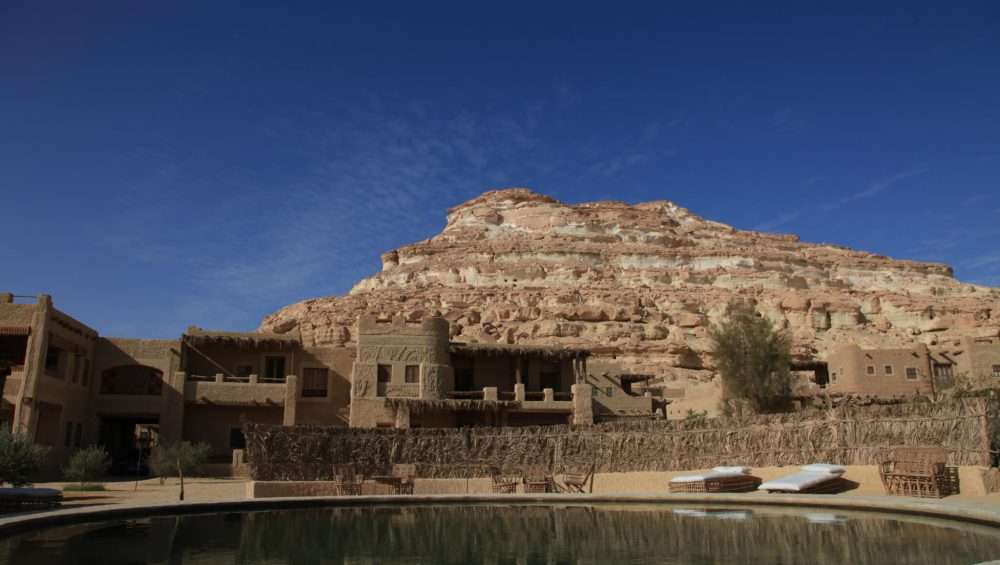
Tucked near the Libyan border, Siwa feels like it belongs to a different Egypt altogether. Palms sway lazily over salt lakes, and ancient mud-brick buildings seem to melt into the earth. Time slows here. It almost forgets itself.
There’s a mystical quality to the place, sharpened by the legend that Alexander the Great once came here to consult the Oracle of Amun. Whether that’s true or not is beside the point. What matters is the quiet. And the light. And that moment you first float in the salty waters of Lake Siwa, more buoyant than you’d expect, staring at the pink-gold horizon.
It’s not flashy. But it stays with you.

2. Wadi El Hitan – Where Whales Walked
The name translates to Valley of the Whales, which sounds bizarre for a place in the middle of a desert. And yet, here it is: a remote valley southwest of Cairo, littered with the fossilized skeletons of ancient whales that once swam in a prehistoric sea.
There’s something eerie about it. Whales, with legs. In the sand. No ticket booths, no snack vendors. Just you, the wind, and remnants of a time so far removed from now that it’s hard to process.
You don’t have to be a paleontology nerd to feel awe here. It’s not so much the science—it’s the scale. The way the universe leaves traces of itself in the most unexpected places. Like it’s winking at us.
3. Ras Mohammed – Underwater Silence
This one feels a little unfair to call a secret, since it’s technically a national park. But compared to Egypt’s big-name attractions, Ras Mohammed might as well be invisible.
Situated at the southern tip of the Sinai Peninsula, it’s a diver’s dream. Coral reefs fan out like stained glass beneath the surface, schools of neon-colored fish darting through the clear blue. Even snorkelers get a front-row seat to this underwater world.
It’s quiet, in that immersive, muffled way only the sea can offer. You don’t think about emails or politics or whether your suitcase is overweight. You just float. Drift. And somewhere between the fish and the coral and that ridiculous feeling of being suspended, you remember how much world exists beneath the surface—literally and metaphorically.
4. Dakhla Oasis – Life on the Fringe
If Siwa feels remote, Dakhla feels like a whisper. It’s deeper into Egypt’s Western Desert, rarely featured in guidebooks, but absolutely worth the detour.
It’s not one place, really. More like a cluster of villages, each with its own rhythm. You’ll see farmers tending to date palms, children waving as they ride donkeys through winding alleys, steam rising from natural hot springs at dusk. There’s an earthy, lived-in magic here. And very little Wi-Fi.
Some travelers describe Dakhla as “unchanged,” but that’s never fully true. Places evolve, even slowly. What’s real, though, is the feeling that you’ve stepped into a world not designed for tourists. You’re not being sold an experience. You’re just… there. Observing. Sometimes participating.
That might be what makes it so powerful.
5. Abydos – The Temple Time Forgot
It’s strange how few people make it to Abydos. The temple there—built by Seti I and completed by his son, Ramses II—is among the most well-preserved in Egypt. The carvings still hold their color in places. The symmetry is astonishing.
But for some reason, it doesn’t pull the same crowds. Maybe because it’s a bit off the beaten track. Or because Luxor and Aswan soak up most of the attention. Whatever the reason, it means you can walk these temple halls nearly alone.
And there’s something deeply moving about that. Hearing your footsteps echo where pharaohs once walked. Seeing the Osireion, the mysterious subterranean structure nearby, half-flooded and shrouded in speculation.
You’ll leave with more questions than answers. That’s okay. Some places are meant to unsettle a little.
So Why Aren’t These Places More Popular?
It’s a fair question. Part of it is access—many of these spots aren’t easy to reach. Another part is marketing; Egypt leans hard into its greatest hits. And travelers, understandably, don’t want to miss the highlights.
But the real reason might be something simpler: not everyone wants the quiet parts of a country. The raw parts. The long roads and unexpected silences. The absence of convenience.
Still, for those who do—those who want to feel like they found something on their own—these places exist. Waiting.
And the truth is, once you’ve floated in the stillness of Siwa or walked among fossilized whales in a desert, the pyramids, somehow, start to feel like just the beginning.