There are some places that get under your skin. Egypt is one of them.
It’s not just the ancient monuments or the dry desert air that seems to whisper stories—it’s the way the whole country balances between chaos and serenity, ancient and present. One minute you’re brushing past a spice vendor in a noisy Cairo alleyway, and the next you’re staring across the quiet, endless sands toward the silhouette of a temple older than most languages.
So if you’ve got 11 days to spare and you’re even slightly curious about Egypt—go. Here’s a flexible, not-too-rushed itinerary that might help you see just enough to fall in love… or at least leave you a little haunted by what you didn’t see.
Day 1-2: Cairo – The Frenetic Welcome
You’ll probably land in Cairo late, groggy and overwhelmed. That’s normal.
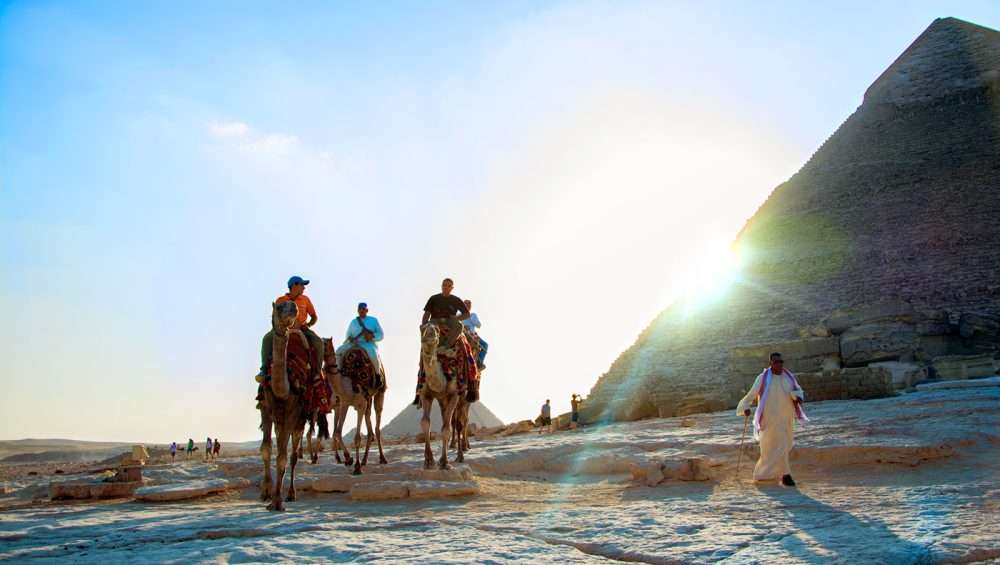
Give yourself two nights here. Not because you’ll love the traffic or the gray layer of dust on everything, but because this city is layered in ways that don’t show up in brochures. Of course, you’ll want to visit the Pyramids of Giza and the Sphinx—they’re as staggering as you’ve imagined, maybe more. They’re also just… there. Rising out of the edge of the city, right next to pizza joints and camel rides.
Spend your first full day with a guide—it’s worth it here—who can give context to the sheer scale of ancient ambition. Then dive into the Egyptian Museum, which feels like it hasn’t changed much since 1902. The King Tut collection still draws crowds. His death mask alone is enough to silence a room.
At night, consider a rooftop dinner overlooking the Nile. You won’t see the stars, but the breeze carries something old.
Day 3: Alexandria – A Coastal Shift
It’s a long drive to Alexandria (3–4 hours), but something about leaving Cairo makes the air feel lighter.
This city is quieter, cooler, more Mediterranean. It’s not the grand capital it once was—nothing like the ancient city of learning it used to be—but you’ll still find the whispers of its past in places like the Bibliotheca Alexandrina or the Catacombs of Kom El Shoqafa.
People either fall in love with Alexandria or they don’t quite get it. Both are fair. Have seafood on the Corniche. Walk. Don’t expect too much. Let the sea do the talking.
Day 4-5: Aswan – Peace on the Nile

Fly south to Aswan. That contrast? Immediate. Slower, warmer, brighter.
Here, the Nile is calm. It feels less like a river and more like something sacred—though maybe that’s just the effect of palm trees, feluccas, and the bright white sails cutting through glassy water.
Visit Philae Temple, which was moved stone by stone to save it from rising waters. Take a boat ride at sunset. It sounds like a cliché, but it’s not. It’s quiet in a way Cairo can’t offer.
If you’re up for it, a day trip to Abu Simbel is worth the early wake-up. Four colossal statues guarding the entrance—it’s almost hard to believe they’re real. And that they were also relocated, in the 1960s, to avoid being flooded? That’s a whole other story.
Day 6-8: Nile Cruise to Luxor – Between Worlds
There are faster ways to get from Aswan to Luxor, sure. But none better than by water.
Three nights on a Nile cruise strikes a sweet spot. You don’t need to splurge, but aim for something clean, comfortable, with a sun deck. The cruise slows everything down in the best way.
Along the way, you’ll stop at Kom Ombo—half dedicated to Sobek, the crocodile god—and Edfu, a surprisingly intact temple that feels more Roman than Egyptian at times. Both are interesting, not overwhelming. You can take them at your own pace.
Evenings on the boat are quiet. You’ll probably sit outside with a drink, watching the desert roll by. It’s strange how modern life disappears here. No emails. No traffic. Just the sound of water and the occasional distant call to prayer.
Day 9-10: Luxor – Ancient Egypt, Fully Unleashed
Luxor deserves more than two days. But if that’s all you have, plan carefully.
Start with the Valley of the Kings—go early. Not just to beat the heat, but to avoid the rush. Choose a few tombs (your ticket covers three). The tomb of Ramses VI often surprises people more than Tutankhamun’s, even though the latter gets all the press.
On the east bank, the Karnak Temple Complex is sprawling and surreal. Columns so massive they seem impossible. Hieroglyphs that still catch light in certain ways. Walk slowly. Then stop.
Some people prefer Luxor Temple at night when it’s lit up and oddly quiet. There’s something powerful about seeing 3,000-year-old pillars under artificial light. It shouldn’t work, but it does.
Day 11: Back to Cairo – One Last Glance
Fly or take the train back to Cairo. Depending on your timing, you might have a few hours to squeeze in something light—a walk through Khan el-Khalili, or just sit with mint tea at a café and people-watch.
It’s easy to end the trip in a blur. But if you can, stop and absorb it for a second. You’ve seen pieces of a country older than most civilizations. And yet, life here keeps pulsing forward, unapologetically modern.
Some Final Thoughts
This itinerary isn’t perfect. Egypt rarely is. Trains might be late. A vendor might try to overcharge you. You’ll probably get dust in your shoes.
But something else happens too. The country stays with you.
Not just the photos of temples and tombs—but the feeling of being small, curious, briefly connected to something immense. Something we still don’t fully understand, and maybe never will.
And honestly? That’s the best part.