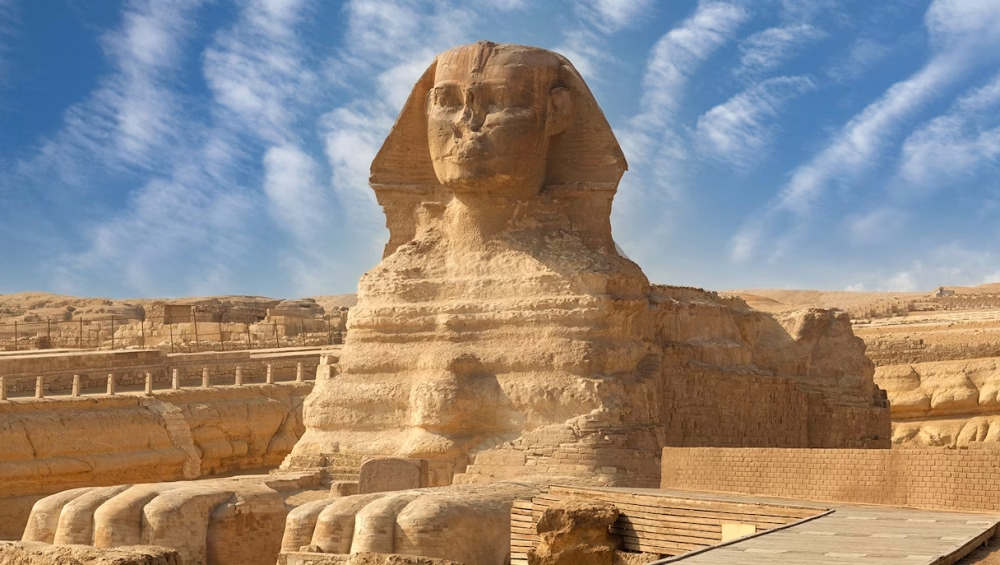
Egypt has a way of slipping into your imagination long before you actually arrive. Maybe it’s the pyramids—those monolithic shapes etched into every childhood history book—or the stories of pharaohs and tombs and endless golden sand. But once you’re actually there, standing beneath that fierce sun, it’s something else entirely. It’s louder, dustier, more alive than you expected. And strangely beautiful in ways that photos don’t quite capture.
Here’s what you should know before you go—some practical advice, some reflections, and a few things I wish someone had told me sooner.
Visas, Money, and the Airport Thing
Let’s start with the boring but necessary stuff.
Most travelers need a visa to enter Egypt, but for many nationalities, you can get one on arrival at major airports like Cairo, Luxor, or Hurghada. It’s simple—you pay around $25 USD (cash is best), and you’re good for 30 days. Just don’t lose the little paper slip they give you. For some reason, it matters later.
As for money, Egypt is a cash-based society. Credit cards work at big hotels and some restaurants, but outside of that? Expect to pay with Egyptian pounds. ATMs are easy to find in cities, not so much in smaller towns or desert outposts. Oh, and the exchange rates can feel unpredictable. Don’t stress over getting the perfect deal. A few extra pounds here or there won’t ruin your trip.
That said—bring small bills. You’ll tip constantly, and not always because you want to. More on that in a minute.
Safety and Scams (and That Tense Feeling)
Let’s address the elephant in the room: is Egypt safe?
Yes, generally. Tourism is a major part of the economy, and the government works hard to keep key areas secure. You’ll see plenty of police presence—sometimes it’s comforting, sometimes it’s a little unsettling. That’s normal.
But scams? Oh, absolutely. From inflated taxi fares to “helpful” strangers guiding you somewhere you didn’t ask to go, you’ll run into plenty of small hustles. Most are harmless, just persistent. Learn to say “la shukran” (no thank you) with a firm tone. And when in doubt, ask someone official-looking before following a stranger into a spice shop that wasn’t on your itinerary.
It’s not a reason to avoid the country. Just go in with eyes open and a bit of healthy skepticism. Like, if someone says, “This temple is closed right now, but I can show you something even better”—walk away.
The Heat, the Dust, and What You’ll Wear
Egypt is hot. Even in winter, the sun can be intense by midday. Summer? It’s brutal. Not just hot, but draining. You’ll sweat constantly, and the dust clings to everything—your skin, your clothes, your camera lens. Accept it early, and pack accordingly.
Light, loose clothing is key. Think breathable fabrics that cover your arms and legs, partly for sun protection and partly out of respect. Egypt is a conservative country, especially outside tourist zones. You don’t need to dress in full traditional wear, but walking around in shorts and tank tops can draw the wrong kind of attention, especially for women.
Also: bring sunscreen, a hat, and more water than you think you need. Then bring some more.
The Pyramids Are… Surreal
Here’s a strange thing—when you first see the pyramids, you might feel underwhelmed. It’s not that they’re small (they’re massive), but that they’re there, right on the edge of Cairo, next to Pizza Hut and souvenir hawkers. The surreal part isn’t their majesty—it’s their context.
But stay a while. Climb a little. Let your eyes adjust to the shape and scale. The longer you’re there, the more they start to sink in. It’s hard to explain. Photos flatten them. Being there, they seem to swell with meaning the longer you look. You’ll start imagining camels trudging by under the same sky, thousands of years ago, which sounds cheesy—but it happens.

Temples, Tombs, and Too Much to Take In
Luxor. Aswan. Abu Simbel. If you’re into ancient history, you’ll be spoiled. But be warned—it’s a lot. At a certain point, you might find yourself staring at yet another colossal statue thinking, “Was this Ramses II again?” or “Wait, haven’t I seen this already?”
That’s okay. The grandeur is overwhelming, and it’s normal to feel a bit fatigued. Don’t force yourself to absorb everything. Let your curiosity guide you. Some temples will speak to you more than others. Karnak, for instance, felt like a dream. Massive columns stretching skyward, half-lit with golden light. Then again, someone else might feel that at Philae or Dendera.
Trust your instincts. Skip things if you need to. Rest. Eat a mango. It’s not a checklist—it’s an experience.
Food, Water, and Stomach Warnings
Egyptian food is flavorful and filling—think lentils, beans, grilled meats, tahini, fresh flatbread. Koshari, the national dish, is a chaotic but delicious mix of rice, pasta, lentils, and tomato sauce. Sounds strange. Tastes amazing.
But the water? Don’t drink it. Stick to bottled. Even locals often avoid tap water. Brushing your teeth with it? Eh, some do, some don’t. If you’ve got a sensitive stomach, maybe play it safe.
Street food can be a gamble, but honestly? Some of the best meals come from a cart in an alley. Just pick places with a line. Locals know.
Final Thoughts (That Don’t Wrap Things Up Neatly)
Egypt doesn’t always make sense. It can be chaotic, slow, loud, incredibly kind, and frustrating in the same afternoon. You’ll fall in love with the Nile at sunset—and then get stuck in traffic for two hours ten minutes later wondering what you’re doing there.
But somehow, it works. You won’t come back the same. That’s not a metaphor. Something about it shifts you. Maybe it’s the timelessness of the temples or the contrast of old and new pressed up against each other.
Or maybe it’s just that Egypt is one of those places that doesn’t try to be easy. And that makes the beauty feel more earned.