Planning a trip to Egypt can feel a little overwhelming at first. There’s just so much to see. Pyramids, temples, tombs, markets, museums, and that’s not even touching the Nile, the Red Sea, or the deserts. So how do you fit it all into just 8 days? Honestly—you won’t. But you can see enough to leave with a head full of ancient history, a camera roll packed with golden sunsets and sandstone ruins, and maybe even a few grains of sand still stuck in your shoes.
Let’s break it down.
Day 1: Arrival in Cairo – Ease Into the Chaos
You’ll probably land in Cairo, which makes sense—it’s the gateway for most international flights. Depending on your arrival time, don’t plan too much. Cairo is loud, fast, and unpredictable. It’s not necessarily a city to fall in love with instantly. But give it a little time, and it’ll grow on you.
Check into your hotel, rest up, maybe take a short walk to get your bearings. If there’s time and energy, swing by Khan El Khalili—the massive bazaar that’s equal parts chaotic and mesmerizing. You won’t need to buy anything, but just walking through the narrow lanes filled with lanterns, spices, and textile stalls can be a good introduction to the pace of Egyptian street life. Grab a tea. Watch the crowd. Breathe.
Day 2: Pyramids of Giza & the Egyptian Museum
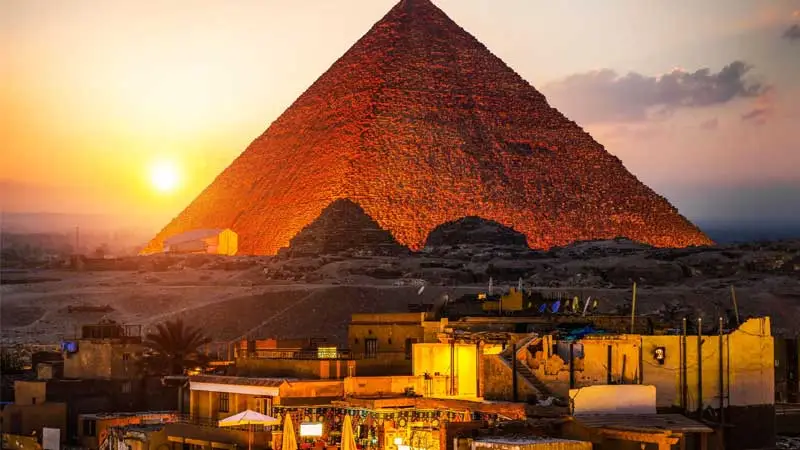
Now’s the time for the big one. The Pyramids. You already know they’re huge, but seeing them in person is something else. They rise straight out of the suburbs, oddly surrounded by fast-food chains and half-finished buildings. It’s a jarring contrast—but then again, Egypt is full of those.
Take your time here. Go inside the Great Pyramid if you’re not claustrophobic—it’s not for everyone. The interior is narrow, steep, and hot, but standing in the heart of that ancient structure? Worth the discomfort for some.
Afterward, visit the Egyptian Museum. It’s old-school and a bit disorganized, but filled with artifacts that are thousands of years old. The new Grand Egyptian Museum is (hopefully) opening fully soon, but until then, this one still holds much of the magic. The mummies and Tutankhamun’s treasures are must-sees, even if the labeling leaves you a little confused.
Day 3: Travel to Aswan – Slow Things Down
Catch a morning flight to Aswan. It’s calmer here—smaller, more relaxed. The Nile runs wide and smooth, and the city has a slower rhythm that feels like a relief after Cairo.
Visit the Philae Temple, which was relocated stone by stone when the Aswan High Dam threatened to flood it. It’s peaceful, perched on an island, accessible only by boat. Something about approaching a temple from the water feels…right. Almost cinematic.
In the evening, walk along the Nile Corniche or take a felucca ride. The breeze, the soft sound of the water, the shifting colors of the sky—it’s one of those moments you’ll keep with you.

Day 4: Abu Simbel & Nubian Culture
This day starts early. Like, 4 a.m. early. The trip to Abu Simbel is long—about three hours each way by car—but if there’s one “extra” you shouldn’t skip, it’s this.
The temples of Abu Simbel, carved directly into rock, are massive and majestic. Ramses II had a flair for the dramatic, and it shows. The story of how these temples were moved in the 1960s to avoid being submerged is almost as impressive as the temples themselves.
After you return to Aswan, consider visiting a Nubian village—by boat if possible. It’s a different side of Egypt, one with bright houses, kind people, and a culture often overlooked in standard itineraries.
Day 5: Nile Cruise to Kom Ombo and Edfu
Board a Nile cruise (most are 3 nights from Aswan to Luxor). Yes, it’s a bit touristy. And no, you won’t be sailing like ancient Egyptians. But drifting along the river as palm trees and desert hills slide by is surprisingly calming.
Stop at Kom Ombo, a temple dedicated to both Horus and Sobek (the crocodile god, which—yes—is as strange as it sounds). Edfu is next, with its towering walls and remarkably intact carvings. These aren’t the headline attractions of Egypt, but they’re deeply atmospheric. You might not have heard of them before your trip, but you’ll remember them after.
Day 6: Luxor’s East Bank – Karnak & Luxor Temple
Arrive in Luxor and dive into some of the most iconic sites of ancient Egypt.
Start with Karnak. It’s sprawling, layered, and full of colossal columns and mysterious corners. Honestly, it can feel like a maze. If you’re into ancient history, this place is a goldmine. If you’re not, you might start zoning out—just being real.
Luxor Temple is smaller, and somehow more elegant. Try to go at sunset when the golden light hits the stone and the call to prayer echoes around you. It’s a moment. Let yourself linger there.
Day 7: West Bank – Valley of the Kings & More
This side of the river holds the Valley of the Kings. The tombs aren’t much to look at from the outside, but inside? Intricate, colorful, almost shockingly well-preserved considering their age. King Tut’s tomb is the most famous, but there are others—larger, more elaborate—that might actually impress you more.
You can also visit Hatshepsut’s Temple and the Colossi of Memnon. Depending on your energy, you might feel like templed-out by now. That’s okay. Take breaks. Stop for juice. Egypt can be intense.
Day 8: Return to Cairo – Departure or Last-Minute Exploring
Fly back to Cairo. If your flight’s late in the day or the next morning, squeeze in whatever you missed. Maybe Coptic Cairo or the Islamic Quarter. Or just sit in a café and reflect. You’ll probably still be processing everything.
Final Thoughts
An 8-day trip to Egypt is like opening a book to read just a few chapters—there’s no way to finish it all, but the parts you do read stay with you.
This itinerary covers a lot, maybe even too much for some. But Egypt is one of those places that rewards effort. The more you explore, the more you uncover. And yet, even when you leave, it won’t feel like enough.