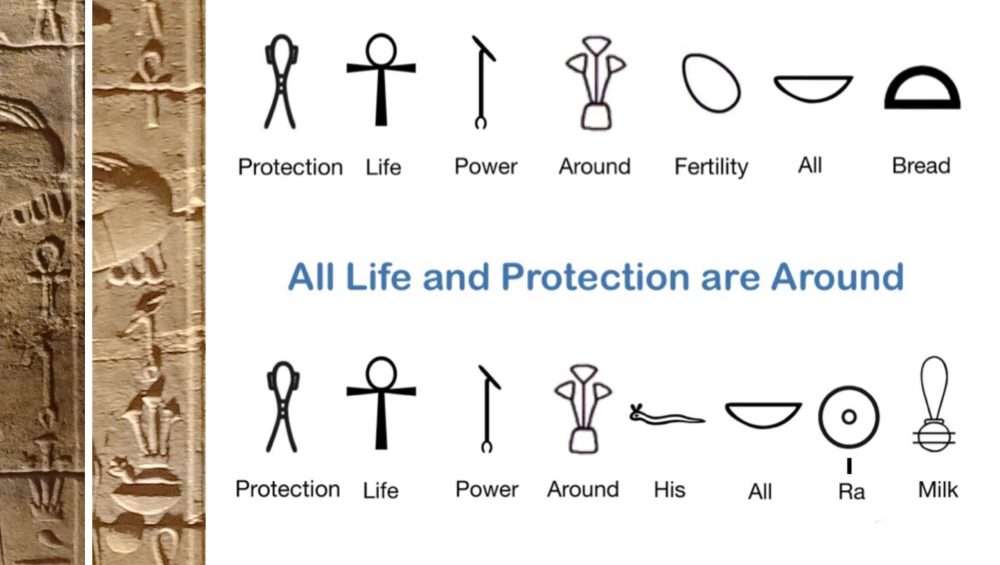

The ankh, often referred to as the “Egyptian symbol of life,” is one of the most recognizable and enduring icons from ancient Egypt. This fascinating hieroglyph has captivated historians, archaeologists, and spiritual seekers for centuries. With its unique looped cross design, the ankh carries deep meanings that transcend its original cultural context, symbolizing life, immortality, and divine power.
Origins of the Ankh : The Egyptian Symbol of Life
The origins of the ankh remain shrouded in mystery. For instance, some scholars suggest it represents a stylized depiction of a sandal strap, while others believe it symbolizes the union of opposites—the feminine oval and the masculine straight line—thus signifying creation and balance. In ancient Egyptian hieroglyphs, the ankh stands for the word “life” and often appears in texts and artwork as a potent emblem of vitality. As a result, its significance permeates many aspects of Egyptian culture.
Spiritual and Religious Significance : The Egyptian Symbol of Life
The ankh held profound significance in Egyptian religion. Artists frequently depicted deities holding the ankh, either offering it to humans or carrying it by the loop to symbolize their dominion over life and death. Furthermore, Egyptians associated it with gods such as Osiris, the god of the afterlife, and Isis, the goddess of magic and motherhood.
Moreover, scenes of the afterlife prominently feature the ankh, where it signifies eternal life and protection. Ancient Egyptians believed that life continued beyond death, and they viewed the ankh as a key to unlocking the gates of immortality. Consequently, it became an essential symbol in their spiritual practices. Therefore, the ankh’s presence in religious ceremonies cannot be understated.
The Ankh in Art and Culture : The Egyptian Symbol of Life
The ankh’s design appears extensively in Egyptian art and monuments. It adorned tomb walls, amulets, and statues, often accompanied by other sacred symbols like the djed (symbol of stability) and the was scepter (symbol of power). For example, pharaohs and priests wore jewelry featuring the ankh, believing it would imbue them with divine energy.
Additionally, artisans used the ankh as a central motif in funerary practices. They buried mummies with ankh-shaped artifacts to ensure safe passage to the afterlife. Craftsmen typically made these objects from materials like gold, lapis lazuli, or faience, each chosen for their symbolic properties. As a result, the ankh became synonymous with protection and immortality. Furthermore, its prominence in artistic and cultural expressions highlights its enduring legacy.
The Ankh in Modern Context
The allure of the ankh has transcended time, finding a place in modern culture. Today, people widely embrace it as a symbol of life and spiritual rebirth, often associating it with African heritage and identity. Moreover, the ankh has become a popular motif in jewelry and tattoos, resonating with those who seek to channel its ancient energy and meanings.
In addition, literature, films, and music frequently feature the ankh, often representing themes of immortality and mysticism. Its universal appeal lies in its simplicity and the profound concepts it embodies. Consequently, it continues to inspire artists and creatives around the world. As such, the ankh remains a vital link between past and present.
Keywords for Traffic Generation
- Ancient Egyptian symbols
- Ankh meaning and significance
- Egyptian hieroglyphs explained
- Spiritual symbols of life
- The ankh and its history
- Egyptian gods and their symbols
- Symbol of immortality
- Ankh in modern culture
- Egyptian artifacts and their meanings
- Mystical symbols of ancient Egypt
Conclusion
The ankh, the Egyptian symbol of life, remains a powerful icon that bridges the ancient and modern worlds. Its rich history and profound symbolism continue to inspire curiosity and reverence. Whether viewed as a spiritual talisman, an artistic masterpiece, or a cultural legacy, the ankh invites us to explore the mysteries of existence and the enduring quest for eternal life. Therefore, its relevance persists as a timeless emblem of human connection to the divine.
Journey Among the Symbols of the Ancient
Egyptian mythology includes an infinite number of great stories to discover plus you can explore these memorable Egyptian symbols by booking unforgettable Egypt tour packages or enjoying one of the incredible Nile river cruises to observe the majestic temples of Egyptian pharaohs and witness the myths of gods and goddesses.