Gods of Egypt: Ancient Egyptian Deities and Their Eternal Power
Meta Description (155 characters):
Discover the Gods of Egypt, their myths, temples, and roles in daily life. Learn about Ra, Osiris, Isis, Horus, Anubis, and more in ancient Egyptian religion.
Introduction: The Significance of the Gods of Egypt
The Gods of Egypt stand as one of the most fascinating elements of world mythology, shaping the beliefs, traditions, and daily lives of the ancient Egyptians. For over 3,000 years, Egyptians worshipped a pantheon of gods and goddesses who influenced nature, kingship, and the afterlife. By exploring the ancient Egyptian gods, we gain insight into how this remarkable civilization explained the mysteries of life, death, and the cosmos.
The Role of the Gods of Egypt in Ancient Life
The Gods of Egypt were deeply woven into the fabric of society. Egyptians prayed to them for fertile crops, protection from disease, and safe passage to the afterlife. Temples were not just places of worship but considered the actual homes of the gods. Priests performed daily offerings and rituals to keep the gods satisfied, maintaining ma’at—the principle of truth, balance, and cosmic order.
Without the blessings of the gods, Egyptians believed the Nile would not flood, crops would fail, and chaos would consume the world.
The Most Important Gods of Egypt
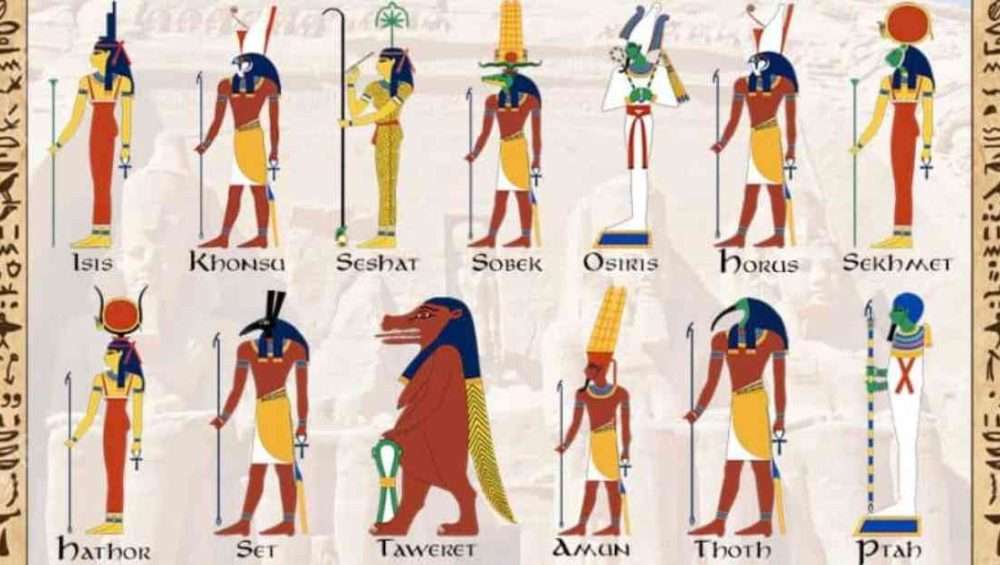
Ra (Re) – The Sun God
The supreme deity, Ra, was the god of the sun and creation. Egyptians believed Ra sailed across the sky by day and traveled through the underworld at night, battling chaos to be reborn each morning. Pharaohs were seen as the earthly embodiment of Ra.
Osiris – God of the Afterlife
Osiris symbolized resurrection and eternal life. After being killed by his brother Set, Osiris was resurrected by his wife, Isis, and became ruler of the underworld. His myth provided Egyptians with hope for life after death.
Isis – Goddess of Magic and Healing
Isis was revered as the goddess of magic, love, and motherhood. Worshipped across Egypt and later in Greece and Rome, she represented compassion and protection, particularly for women and children.
Horus – God of Kingship and Protection
Depicted as a falcon-headed god, Horus symbolized royal power and the eternal struggle against chaos. Pharaohs were believed to be Horus incarnate, ruling Egypt under his divine authority.
Anubis – Guardian of the Dead
Anubis, the jackal-headed god, presided over funerary rituals. He guided souls through the underworld and weighed the heart of the deceased against the feather of ma’at, deciding their fate.
Set – God of Chaos and Storms
Feared for his destructive nature, Set embodied chaos, violence, and desert storms. Despite his negative role, Set was still worshipped as a necessary force in maintaining balance.
Thoth – God of Knowledge and Writing
Thoth was associated with wisdom, writing, and the moon. As the divine scribe, he invented hieroglyphs and recorded the judgment of souls.
Hathor – Goddess of Love and Joy
Beloved among Egyptians, Hathor symbolized music, fertility, and motherhood. She was often depicted as a nurturing cow or a woman crowned with cow horns and a sun disk.
Creation Myth of the Gods of Egypt
According to Egyptian mythology, the universe began with the god Atum emerging from the primordial waters of chaos. From Atum came Shu (air) and Tefnut (moisture), followed by Geb (earth) and Nut (sky). Their children—Osiris, Isis, Set, and Nephthys—formed the Ennead, a divine family that governed life and death.
This myth highlighted the belief that order was born out of chaos and maintained through the gods’ power.
Worship and Temples of the Gods of Egypt
Temples were built across Egypt to honor the gods, with the Temple of Karnak (dedicated to Amun-Ra) being the most significant. Priests performed daily rituals, cleansing statues, offering food, and burning incense to keep the gods satisfied.
Ordinary Egyptians worshipped through prayers, amulets, and festivals, ensuring they lived in harmony with the gods’ will.
The Afterlife and the Judgment of Souls
The Gods of Egypt were central to beliefs about death and rebirth. In the Hall of Judgment, Anubis weighed the heart of the deceased against the feather of ma’at. Thoth recorded the outcome, while Osiris decided the soul’s eternal fate. Those who passed entered the paradise of the “Field of Reeds,” while the wicked were devoured by Ammit.
This belief system gave Egyptians comfort that death was not the end, but a passage to eternity.
Influence of the Gods of Egypt on Later Civilizations
The worship of the Egyptian gods extended beyond Egypt. The cult of Isis, for example, spread across the Mediterranean, influencing Roman religion. Today, Egyptian mythology inspires films, books, and video games, proving the timeless appeal of these deities.
Conclusion: The Legacy of the Gods of Egypt
The Gods of Egypt were more than divine beings—they represented the forces of nature, justice, and eternal life. Their myths and rituals shaped Egyptian identity for millennia, and their influence still captivates the modern world.
By studying the gods of ancient Egypt, we uncover not only the foundations of Egyptian religion but also timeless stories of creation, order, and the human quest for immortality.
Egypt Tours And Trips
Ancient wonders. Hidden treasures. Endless seas and golden sand. Make lifelong memories on our Egypt tours.
Once a land of dynasties and decadence; now a land where time stands still. Our Egypt Journeys sets you in the shadows of history. At the foot of the legendary Great Pyramids. In the heart of the tomb-strewn Valley of the Kings. Or before the mighty temples of Abu Simbel.
That’s not all. Our tours to Egypt offer what money can’t buy. Like once-in-a-lifetime opportunities. Rare experiences. And life-long friendships with your fellow travellers.