
How Were the Pyramids Built? The Ultimate Guide to Ancient Egyptian Engineering
The mystery of how the Egyptian pyramids were built has fascinated historians, archaeologists, and engineers for centuries. These awe-inspiring structures, especially the Great Pyramid of Giza, stand as a testament to the advanced engineering skills of the ancient Egyptians. But how did they construct such monumental buildings without modern machinery? In this article, we’ll explore the most credible pyramid construction theories, backed by archaeological evidence and expert analysis.
How the Ancient Egyptians Built the Pyramids
1. Quarrying and Transporting the Stones
One of the biggest challenges in pyramid construction was sourcing and transporting the massive limestone and granite blocks. The Great Pyramid alone is made of approximately 2.3 million blocks, some weighing up to 80 tons!
🔹 Quarrying: Archaeologists have discovered that the limestone blocks came from nearby quarries, while the granite used for the pyramid’s inner chambers was transported from Aswan, over 800 kilometers (500 miles) away.
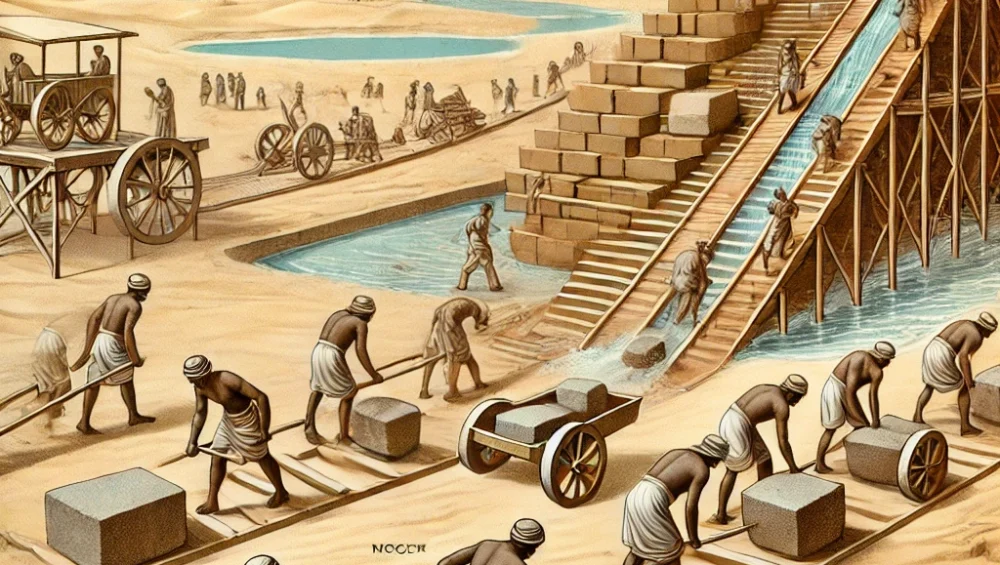
🔹 Transportation: Ancient Egyptians likely used wooden sledges, dragging the stones over wet sand to reduce friction. Recent discoveries suggest that a network of canals and the Nile River played a crucial role in moving these stones closer to the pyramid sites.
2. Who Built the Pyramids? (Debunking the Slave Myth)
A common misconception is that the pyramids were built by slaves. However, archaeological evidence suggests that a skilled workforce of paid laborers was responsible.
🔹 Excavations near Giza uncovered workers’ villages, showing they lived in well-structured communities with access to food, medical care, and even beer.
🔹 Experts estimate that around 20,000–30,000 workers were involved in constructing the Great Pyramid, working in rotating shifts.
3. Pyramid Ramp Theories: How Were Blocks Lifted?
One of the biggest mysteries in pyramid construction is how the ancient Egyptians lifted such heavy stones to great heights. Several theories have been proposed:
✅ Straight Ramp Theory: A long, gradually sloping ramp extended from the base to the upper levels. However, this would require an enormous amount of materials.
✅ Spiral Ramp Theory: Ramps may have wrapped around the pyramid, making it easier to haul stones upwards.
✅ Internal Ramp Theory: Proposed by architect Jean-Pierre Houdin, this theory suggests that a hidden spiral ramp inside the pyramid was used to transport blocks to higher levels.
4. Precision Engineering and Astronomical Alignment
One of the most astonishing aspects of the pyramids is their perfect alignment with the cardinal directions. The Great Pyramid of Giza is aligned with an accuracy of 0.05 degrees to true north, an engineering feat that still puzzles modern scientists.
🔹 The ancient Egyptians likely used the stars, shadow measurements, or plumb bobs to achieve such precise alignments.
🔹 The pyramid’s dimensions also reflect advanced mathematical knowledge, incorporating concepts like the golden ratio (phi) and pi in their design.
5. The Pyramid’s Original Appearance
Originally, the pyramids were covered in polished white limestone, reflecting sunlight and making them shine brightly in the desert. Some historians believe that the Great Pyramid’s capstone (pyramidion) may have been covered in gold, making it a dazzling beacon visible from miles away.
6. Advanced Tools and Building Techniques
Despite lacking iron tools or modern machinery, the Egyptians used copper chisels, dolerite hammers, and wooden rollers. They also developed ingenious methods like lever systems and possibly even water flotation techniques to aid construction.
How Long Did It Take to Build the Pyramids?
The Great Pyramid of Giza is estimated to have taken about 20 years to complete during the reign of Pharaoh Khufu (circa 2580–2560 BCE). The project required exceptional organization, skilled labor, and logistical planning.
Conclusion: A Marvel of Ancient Engineering
The construction of the Egyptian pyramids remains one of history’s greatest achievements. Through innovative engineering, skilled labor, and astronomical precision, the ancient Egyptians built structures that have stood for over 4,500 years. While some questions remain, modern research continues to unveil the secrets behind these incredible monuments.
Tours to the Pyramids
Egypt has always been the home of the impossible; within the heart of the country in Cairo lies the miraculous Pyramids of Giza, where the impossible is yet to be explained. The cities of Egypt like Giza, Cairo, Aswan, and Luxor are the purest reflection of how the ancient Egyptians’ vision was extraordinary, so we offer you the chance to enjoy a marvelous trip to Egypt with the Nile river cruise. Also, our Cairo day tours are the best way to book your trip if you are in Cairo. Check our Egypt day tours if you are in any of Egypt’s top destinations to arrange your tours.