Ancient Egyptian Art: Symbolism, Style, and Legacy
Ancient Egyptian art is one of the most influential artistic traditions in human history. Known for its timeless beauty, symbolic meaning, and strict artistic conventions, it offers deep insights into the culture, religion, and daily life of the people who lived along the Nile. From monumental temples to delicate jewelry, Egyptian art continues to inspire and fascinate the modern world.
Origins of Ancient Egyptian Art
The roots of Ancient Egyptian art stretch back more than 5,000 years, beginning around 3000 BCE during the unification of Upper and Lower Egypt. Early forms included pottery, ivory carvings, and ceremonial palettes, often decorated with symbolic images of gods, animals, and kings.
What makes Egyptian art unique is its consistency. For over three millennia, artists followed strict rules that emphasized harmony, balance, and symbolism rather than individual creativity. This consistency was tied to religion and the belief in an eternal order (ma'at) that had to be reflected in both society and art.
Key Characteristics of Ancient Egyptian Art
The style of Ancient Egyptian art is instantly recognizable. Artists used a strict system known as the “canon of proportions” that defined how figures should be represented.
Some of its most important features include:
-
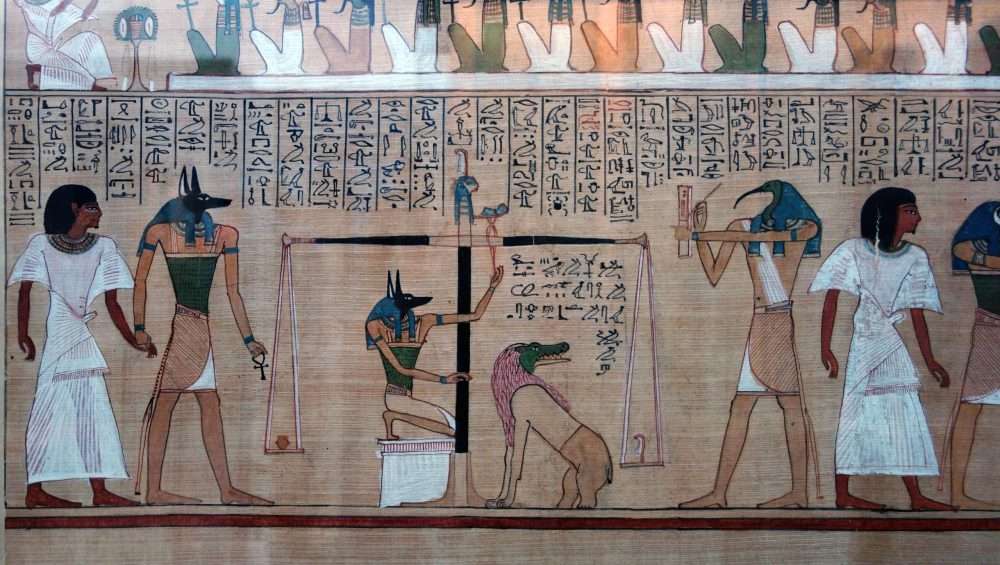
Frontalism – Figures are shown in composite view: heads and legs in profile, while eyes and shoulders face forward.
-
Hierarchical scale – Pharaohs and gods are depicted larger than servants or common people to indicate importance.
-
Symbolic colors – Green represented fertility, gold symbolized eternity, blue meant life and rebirth, while black reflected regeneration and the rich soil of the Nile.
-
Registers – Scenes are arranged in horizontal rows without perspective, prioritizing clarity and order.
These artistic rules gave Ancient Egyptian paintings, sculptures, and reliefs a sense of timelessness and spiritual authority.
Religious and Funerary Art
Religion dominated every aspect of Egyptian life, and naturally, Ancient Egyptian art reflected this deep spirituality. Temples were decorated with vast relief carvings showing pharaohs making offerings to the gods. Tombs contained wall paintings illustrating the journey to the afterlife.
The Egyptians believed that art had power beyond decoration—it was functional. Tomb paintings of farming, fishing, and banquets ensured that the deceased would enjoy these activities in eternity. Statues placed inside tombs served as eternal substitutes for the soul (ka) in case the body was destroyed.
Il Libro dei Morti, often richly illustrated, contained spells and images to guide the deceased through the underworld. These artworks reveal how closely art, religion, and the afterlife were connected in Ancient Egypt.
Sculpture and Monumental Art
One of the most enduring aspects of Ancient Egyptian art is its monumental sculpture. The colossal statues of Ramses II at Abu Simbel, the serene bust of Queen Nefertiti, and the Great Sphinx of Giza are just a few examples of Egypt’s sculptural mastery.
Sculptures were not only artistic expressions but also political tools. Pharaohs used them to project divine authority and immortality. Even smaller statues made of bronze, faience, or wood carried strong religious symbolism, often depicting gods, sacred animals, or everyday figures.
Ancient Egyptian Painting
Although less durable than stone sculpture, Ancient Egyptian paintings remain some of the most colorful insights into the ancient world. Preserved by Egypt’s dry desert climate, tomb paintings depict scenes of agriculture, banquets, music, and rituals.
Painters used natural mineral pigments to create vibrant, long-lasting colors. Each color held symbolic value:
-
Red symbolized energy and power.
-
Blue represented the life-giving Nile and the heavens.
-
Yellow signified the sun and eternal life.
These painted scenes were not meant to be “art” in the modern sense but rather magical tools to guarantee a prosperous afterlife.
Hieroglyphs and Artistic Writing
No discussion of Ancient Egyptian art is complete without mentioning hieroglyphs. The Egyptians considered writing itself a sacred art form. Hieroglyphic inscriptions were often beautifully carved or painted on temple walls, sarcophagi, and monuments.
Hieroglyphs were not just language—they were also imagery. Every symbol carried both phonetic meaning and artistic beauty. Together with illustrations, hieroglyphs told stories of pharaohs, gods, battles, and rituals, blending writing and art into a unified expression.
Decorative Arts and Daily Life
Beyond temples and tombs, Ancient Egyptian art extended into jewelry, pottery, textiles, and furniture. Gold jewelry inlaid with lapis lazuli, turquoise, and carnelian reflected both craftsmanship and wealth. Household items such as beds, chests, and cosmetic jars were often decorated with symbolic designs.
These everyday objects demonstrate how art was integrated into all levels of Egyptian life, from royalty to commoners.
Legacy and Influence of Ancient Egyptian Art
The influence of Ancient Egyptian art spread far beyond the Nile Valley. Greek and Roman artists adopted elements of Egyptian sculpture, while later civilizations admired Egypt’s monumental architecture.
In modern times, the rediscovery of Egypt during the 19th century sparked “Egyptomania.” Egyptian motifs appeared in architecture, jewelry, fashion, and even Hollywood films. Today, millions of tourists travel to Egypt each year to admire the pyramids, temples, and museum collections, keeping the legacy of Egyptian art alive.
Moreover, contemporary artists and designers continue to draw inspiration from the symbolism of Ancient Egyptian art, proving its timeless relevance.
Conclusione
Ancient Egyptian art is more than a collection of statues, paintings, and hieroglyphs—it is a mirror of an entire civilization. Through its symbolism, strict style, and spiritual purpose, it reflects the Egyptians’ devotion to order, eternity, and the divine.
From the colossal Sphinx to the delicate lines of hieroglyphs, the art of Ancient Egypt remains one of humanity’s greatest cultural treasures. By studying and preserving this heritage, we gain a deeper understanding of the values and beliefs that shaped one of the most remarkable civilizations in history.
Tour alla Civiltà Egizia
Non c'è posto migliore sulla terra che può offrire uno sguardo più approfondito la bella nucleo di antica arte di Egitto. Si dispone di questo, una volta-in-a-vita opportunità con i nostri Egitto pacchetti di viaggio per esplorare i monumenti e reperti dell'antico Egitto attraverso le incantevoli città di il Cairo, Luxor e Aswan attraverso un indimenticabile Crociera sul nilo la forza vitale di questo celeste