
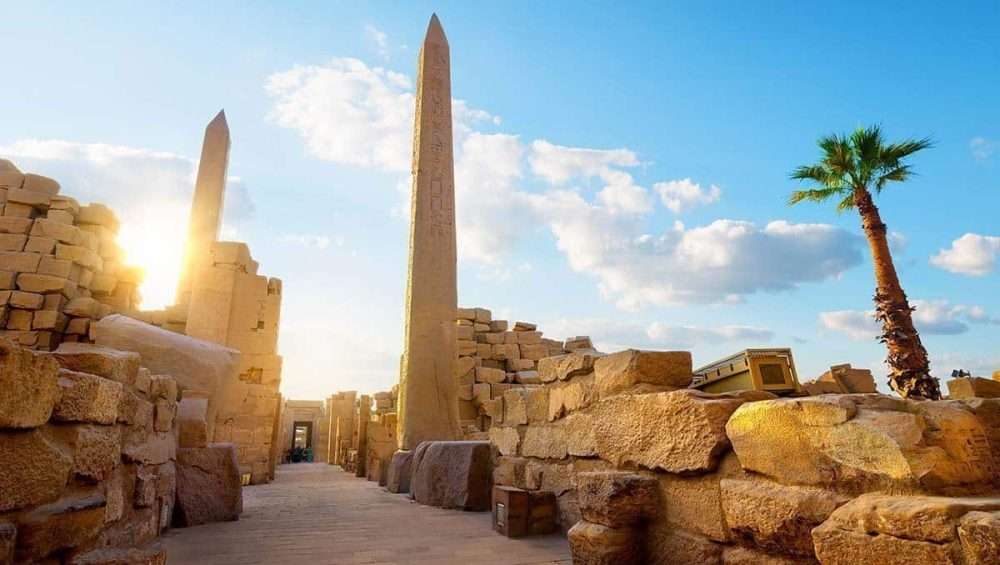
When you think of Ancient Egypt, towering pyramids and majestic temples might come to mind, but another monumental feature dominates the Egyptian landscape—the obélisque. These elegant stone pillars have fascinated historians, travelers, and architects for thousands of years. From the bustling squares of modern cities to the sacred grounds of Luxor and Karnak, the obelisk stands as a testament to Egyptian artistry, engineering, and spirituality.
Qu'est ce qu'un Obélisque?
An obelisk is a tall, four-sided, narrow monument with a pyramidion (a small pyramid-shaped top) at its peak. Traditionally carved from a single piece of stone, often granite from Aswan, an obelisk was erected as a tribute to the sun god Ra. Ancient Egyptians believed that the shape of the obelisk represented a petrified ray of the sun, making it a sacred and powerful symbol.
The Origins of the Obelisk
Obelisks originated in Ancient Egypt during the Old Kingdom, but their construction flourished during the New Kingdom era. Pharaohs built these massive structures to commemorate victories, honor deities, and display royal power. They were often placed at the entrances of temples, serving both as architectural wonders and spiritual beacons.
The word “obelisk” itself comes from the Greek term obeliskos, but the Ancient Egyptians called them tekhen. Over time, these monuments became iconic symbols of Egyptian civilization, later inspiring monuments in Rome, Paris, London, and even Washington D.C.

How Were Obelisks Made?
The construction of an obelisk remains one of the most impressive feats of ancient engineering. Each obelisk was carved from a single block of granite in Aswan, a city famous for its quarries. Workers used copper and bronze tools to shape the stone, a process that could take years. The largest known obelisk, the unfinished obelisk of Aswan, still lies in its quarry, revealing the challenges faced by ancient stonemasons. Had it been completed, it would have measured about 42 meters and weighed over 1,000 tons.
Transporting these colossal monuments was another incredible achievement. Obelisks were dragged onto wooden sledges, floated down the Nile on large barges, and finally erected using ramps and ropes—a process requiring precision and immense manpower.
Famous Obelisks in Egypt
1. The Obelisk of Hatshepsut
One of the most remarkable obelisks in Luxor is the Hatshepsut Obelisk at Karnak Temple. Standing at nearly 29 meters, this granite monument honors the powerful female pharaoh who ruled during the 18th Dynasty.
2. Luxor Temple Obelisk
Originally, Luxor Temple featured two obelisks at its entrance. Today, only one remains in place, while the other was transported to Paris in the 19th century and now stands proudly in the Place de la Concorde.
3. The Unfinished Obelisk
Located in Aswan, this massive obelisk was abandoned when cracks appeared during carving. It provides incredible insight into ancient quarrying techniques and is a must-see for history enthusiasts.
Obelisks Around the World
The fascination with obelisks didn’t end with Ancient Egypt. Over the centuries, rulers and explorers transported these monuments to major cities across the globe:
- Rome boasts more Egyptian obelisks than any other city.
- Paris features the famous Luxor Obelisk in the Place de la Concorde.
- London is home to Cleopatra’s Needle on the Thames Embankment.
- Washington D.C. built the Washington Monument, inspired by the ancient Egyptian obelisk.
Why Visit Obelisks in Egypt?
Standing before an obelisk in Egypt is a powerful experience. These monuments are not just stones—they are messages from a civilization that valued the sun, the gods, and eternal life. Every carving tells a story, every symbol reflects devotion. For travelers, visiting an obelisk is like touching history itself.
Tips for Travelers
- Best Time to Visit: October to April, when the weather is cooler.
- Top Sites: Karnak Temple in Luxor, Luxor Temple, and the Aswan quarry.
- Photography Tip: Visit early in the morning or near sunset for the best lighting and fewer crowds.
The Legacy of the Obelisk
Obelisks have stood for thousands of years, witnessing the rise and fall of empires. Today, they continue to inspire architects and travelers alike. Whether in their original setting along the Nile or relocated to far-off cities, obelisks remain symbols of strength, spirituality, and timeless beauty.
So, if you’re planning a voyage en Egypte, make sure to include these incredible monuments on your itinerary. An obelisk is more than a structure—it is a link between the ancient and the modern world.