
The Abu Simbel Temples: Eternal Symbols of Ancient Egypt
Perched on the western shores of Lake Nasser in southern Egypt, the Abu Simbel Temples stand as symbols of ancient Egypt’s ingenuity and artistic brilliance. Commissioned by Pharaoh Ramesses II in the 13th century BCE, these temples reflect the grandeur and spiritual depth of an era that continues to captivate the world. Today, they attract visitors from across the globe to witness their magnificence and historical importance.
Origins and Purpose: Abu Simbel Temples Egypt
Ramesses II built the Abu Simbel Temples during the New Kingdom period to immortalize his achievements and honor the gods. The larger structure, known as the Great Temple, is dedicated to Amun-Ra, Ra-Horakhty, and Ptah, alongside the pharaoh himself. Meanwhile, the smaller temple honors the goddess Hathor and Queen Nefertari, Ramesses’ cherished wife. This dual dedication highlights the integration of human and divine elements in ancient Egyptian culture.
Architectural Wonders: Abu Simbel Temples Egypt
The Great Temple showcases advanced engineering and artistic skills. For instance, four colossal statues of Ramesses II, each over 20 meters tall, dominate the facade. These figures symbolize strength and divinity. Additionally, inside the temple, elaborately decorated halls and chambers depict Ramesses II’s military victories, including the famous Battle of Kadesh.
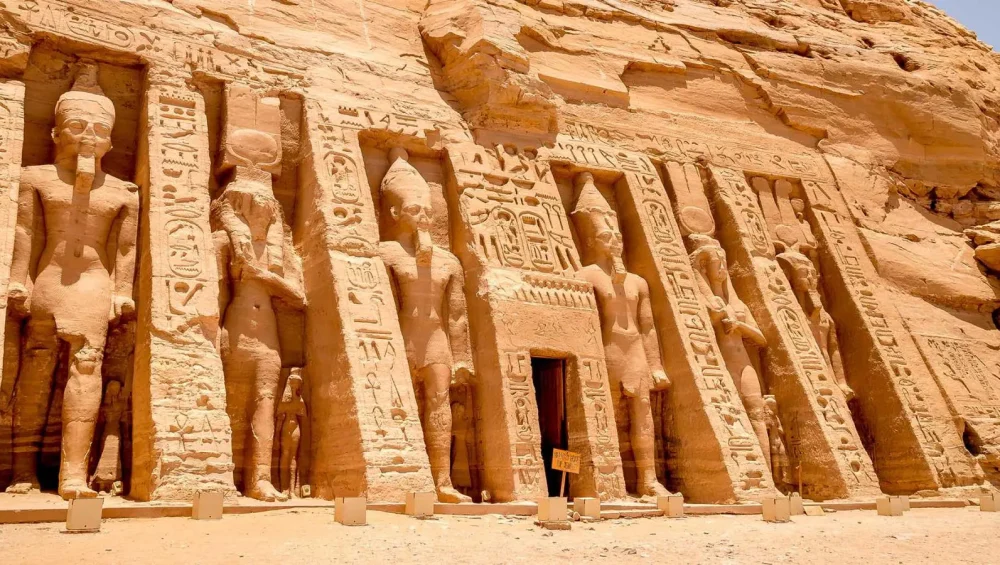
The smaller temple, while more modest, is equally breathtaking. Its facade features six statues of Ramesses II and Queen Nefertari, portrayed as equals—an exceptional depiction in ancient Egyptian art. Moreover, inside, carvings and artwork celebrate Hathor’s divine presence and the bond between the royal couple.
A Rescue Mission for the Ages
In the 1960s, the Aswan High Dam project threatened to submerge the Abu Simbel Temples under Lake Nasser. To save them, an international effort led by UNESCO relocated the temples. Specifically, engineers dismantled the structures, moved them to higher ground, and reassembled them on an artificial hill. As a result, this ambitious project preserved these treasures and showcased the importance of global collaboration in protecting cultural heritage.
Cosmic Precision
The Great Temple’s design reflects the ancient Egyptians’ mastery of astronomy. For example, twice a year, on February 22 and October 22, sunlight penetrates the inner sanctum, illuminating statues of Amun-Ra, Ra-Horakhty, and Ramesses II. Meanwhile, the statue of Ptah, symbolizing the underworld, remains in shadow. These dates likely mark significant events in Ramesses II’s life, showcasing the Egyptians’ advanced understanding of celestial movements.
Legacy and Significance
The Abu Simbel Temples are more than monuments; they symbolize the political power, religious devotion, and artistic excellence of ancient Egypt. Consequently, they provide a glimpse into a civilization that excelled in architecture, engineering, and cultural expression.
A Modern Marvel
Today, the Abu Simbel Temples are a UNESCO World Heritage Site and a cornerstone of Egypt’s tourism. Visitors can reach the site by air, road, or Nile cruises. Moreover, the temples’ monumental facades, intricate decorations, and rich history leave a lasting impression on all who visit.
Conclusion
The Abu Simbel Temples are timeless symbols of human creativity and resilience. Therefore, they connect us to an era that mastered art, science, and spirituality with unparalleled brilliance. Ultimately, these extraordinary temples continue to inspire awe and admiration, ensuring their place as cherished cultural landmarks for generations to come.