
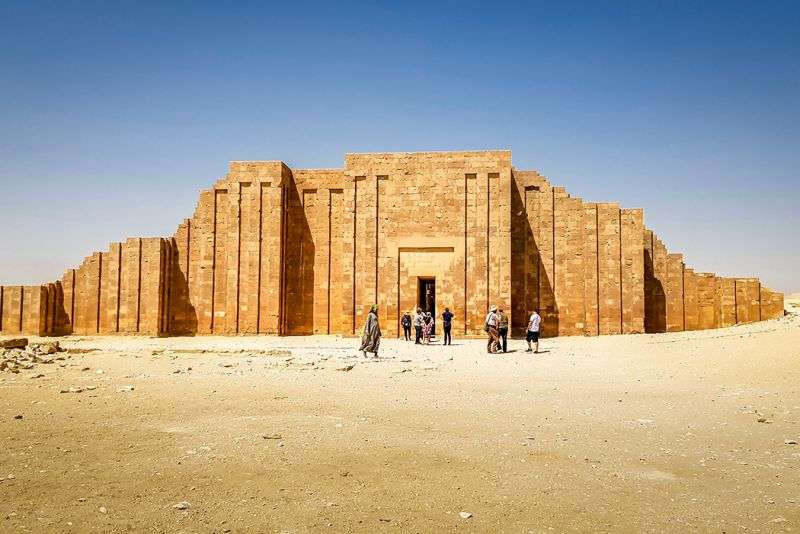
The Ancient City of Memphis
The Ancient City of Memphis, the ancient capital of Egypt, is one of the most historically significant and fascinating cities of antiquity. Situated strategically at the apex of the Nile River Delta, Memphis played a pivotal role in the cultural, political, and religious landscape of ancient Egypt for over three millennia.
Foundation and Importance
According to legend, Memphis was founded by King Menes around 3100 BCE. Menes is credited with unifying Upper and Lower Egypt, and Memphis served as the first capital of the unified state. Its location near the meeting point of Upper and Lower Egypt made it an ideal administrative center, fostering trade and communication between the two regions. The city’s name in ancient Egyptian, “Ineb-Hedj,” translates to “The White Walls,” referencing the grandeur of its early structures.
Religious and Cultural Significance
Memphis was a prominent religious hub, particularly dedicated to the worship of Ptah, the god of craftsmen and creation. The Temple of Ptah was one of the city’s most notable landmarks, attracting pilgrims and dignitaries from across Egypt. Additionally, Memphis was home to a plethora of statues, temples, and monuments, many of which celebrated its divine patrons and the pharaohs who ruled from its heart.
The city also served as a melting pot of cultures due to its strategic location and thriving trade networks. Merchants and artisans from across the Mediterranean and Near East converged in Memphis, contributing to its cosmopolitan atmosphere.
Decline and Legacy
The prominence of Memphis began to wane after the rise of Thebes during the Middle Kingdom and later Alexandria during the Ptolemaic period. However, it remained an important religious center well into the Roman era. By the time of the Arab conquest of Egypt in the 7th century CE, much of Memphis had fallen into ruin, with many of its stones repurposed for building projects in nearby Cairo.
Despite its decline, the legacy of Memphis endures. Archaeological excavations have uncovered remarkable artifacts, including colossal statues of Ramses II and the famed Alabaster Sphinx. These findings provide invaluable insights into the city’s grandeur and its role in shaping ancient Egyptian civilization.
Modern-Day Significance
Today, the ruins of Memphis, located near the village of Mit Rahina, are a UNESCO World Heritage site. Visitors can explore its open-air museum, which houses some of its most iconic relics. The site continues to captivate archaeologists and historians, shedding light on the complexities of one of the world’s earliest urban centers.
In conclusion, Memphis stands as a testament to the ingenuity, spirituality, and resilience of ancient Egypt. Its contributions to art, architecture, and governance have left an indelible mark on human history, ensuring its place among the great cities of the ancient world.